One of the things I love about collecting vintage men’s adventure magazines is that I never know what fascinating examples of pop culture or history I’ll find in an issue.
Almost every one has something that sends me down a rabbit hole.
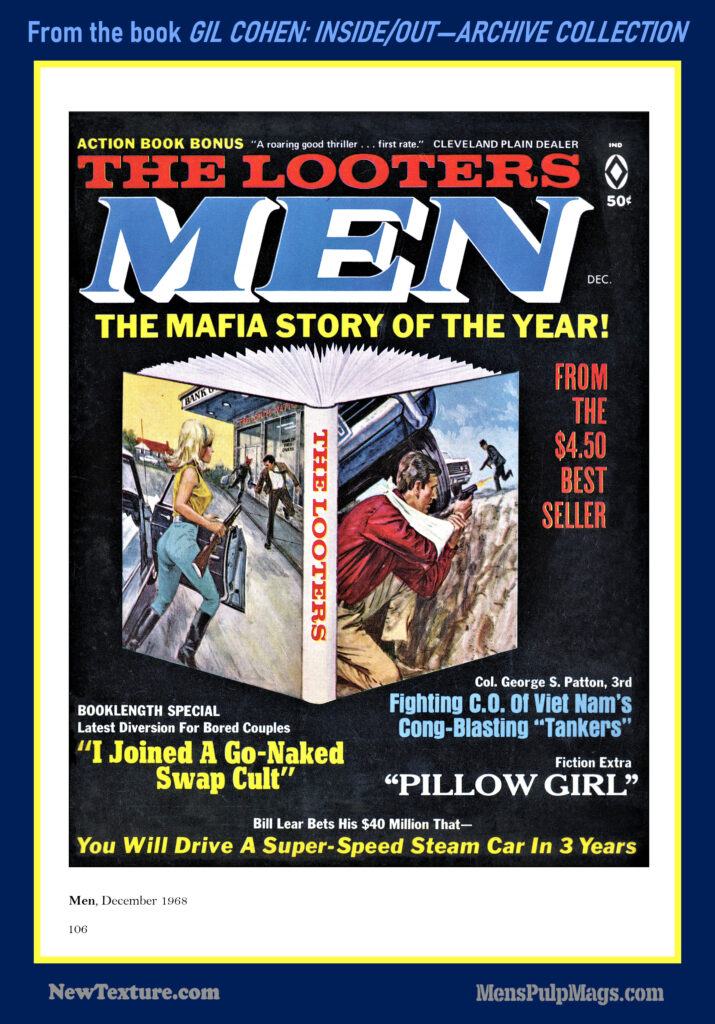
One recent trip down a rabbit hole began with the cover of the December 1968 issue of MEN..
Not long ago, Wyatt Doyle and I published GIL COHEN: INSIDE/OUT—THE ARCHIVE EDITION.
It’s the first major collection of men’s adventure magazine cover and interior illustrations created by Gil Cohen, one of the top artists for the genre through all three decades of its existence. (You can read more about that book in this post.)
MEN, December 1968 is one of the covers we included. It features a faux book cover Gil created to promote that issue’s “Book Bonus” story—a condensed version of the crime novel THE LOOTERS by John H. Reese (1910–1981).
No edition of that book was ever published with the artwork Gil painted. It’s a fake cover.
But THE LOOTERS is a real book—and very noteworthy. You just may not know it by that name.
It was published by Random House in a hardcover edition in 1968 and soon reprinted in a paperback edition by Pyramid.
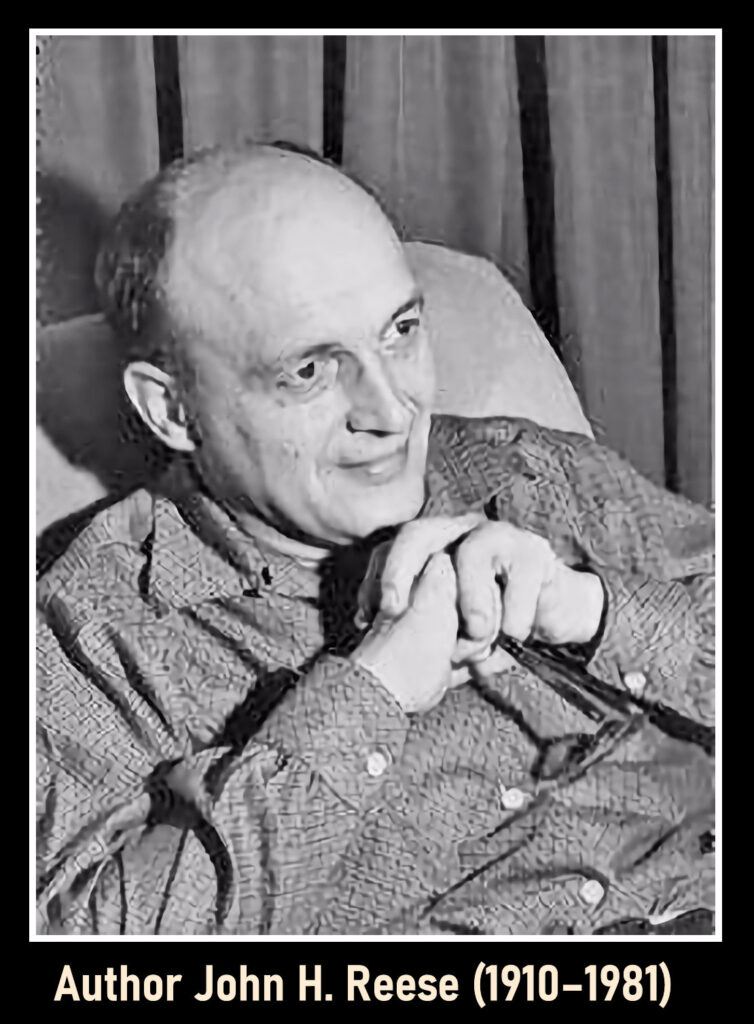
Although Reese is not widely known today, he was amazingly prolific.
Over the course of a career that began in the pulp era and continued into the 1970s, he wrote more than 300 short stories and more than 40 novels, the best-known of which today is THE LOOTERS.
Pulp readers knew Reese by that name or one of his pseudonyms (Eddie Abbott, John Jo Carpenter, Camford Cheavly and Camford Sheavely) from stories in magazines like 10 STORY WESTERN, LARIAT STORY, FIFTEEN WESTERN TALES, RANCH ROMANCES, BLACK MASK, DETECTIVE TALES, PRIVATE DETECTIVE STORIES, and SPEED DETECTIVE.
He also penned stories for mainstream and men’s magazines, including SATURDAY EVENING POST, REDBOOK, ESQUIRE, PLAYBOY, ARGOSY, BLUEBOOK, and MEN— and for fiction digest mags like ALFRED HITCHCOCK’S MYSTERY MAGAZINE, ELLERY QUEEN’S MYSTERY MAGAZINE, MIKE SHAYNE MYSTERY MAGAZINE, and THE MAN FROM U.N.C.L.E. MAGAZINE.
In the realm of novels, Reese primarily wrote Westerns, though the only one I was aware of before researching this post was LONESOME COWBOY (1971).
It’s one of the novels with a Ron Lesser cover painting that’s included in THE ART OF RON LESSER, VOL. 3: WILD, WILD, WESTERNS, which I co-edited with Bill Cunningham, James Reasoner and Tim Hewitt.
Today, THE LOOTERS is probably Reese’s best-known non-Western novel.
It caught the attention of the great Hollywood producer and director Don Siegel. In 1973, Siegel adapted the novel as the film CHARLEY VARRICK, and tapped Walter Matthau to play the title character.
I think it’s one of the best noir-style crime thrillers of the 1970s. After rewatching it and reading the novel and the “Book Bonus” version in MEN, I also know the film is significantly different from the novel.
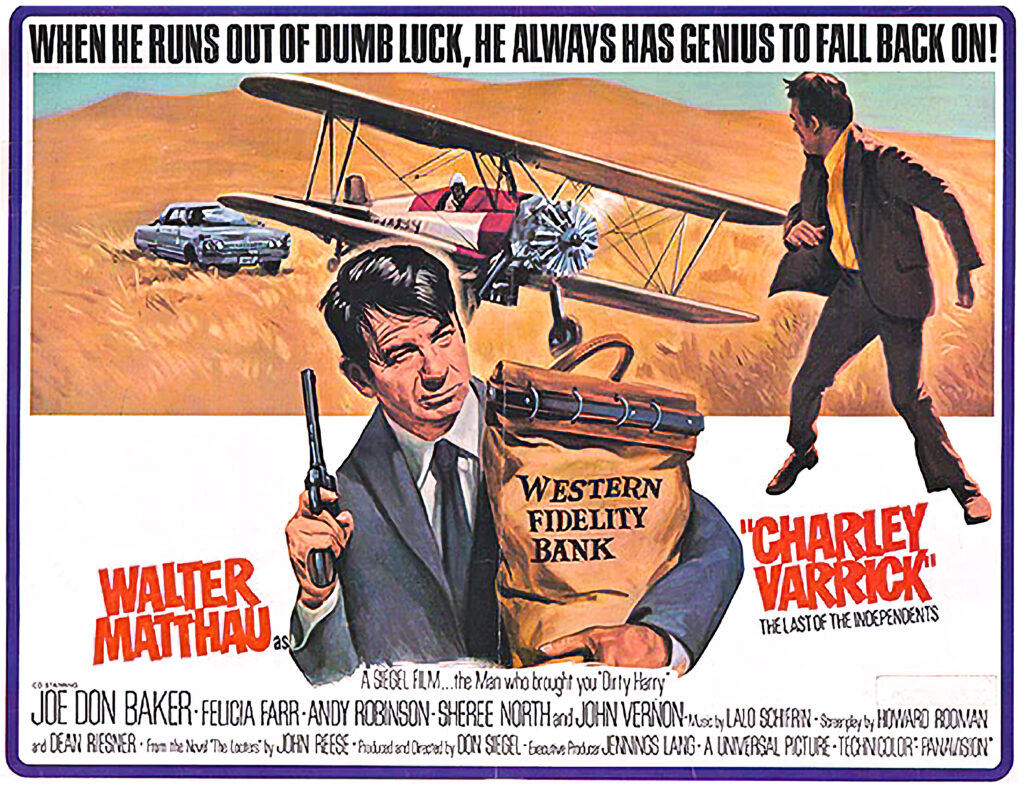
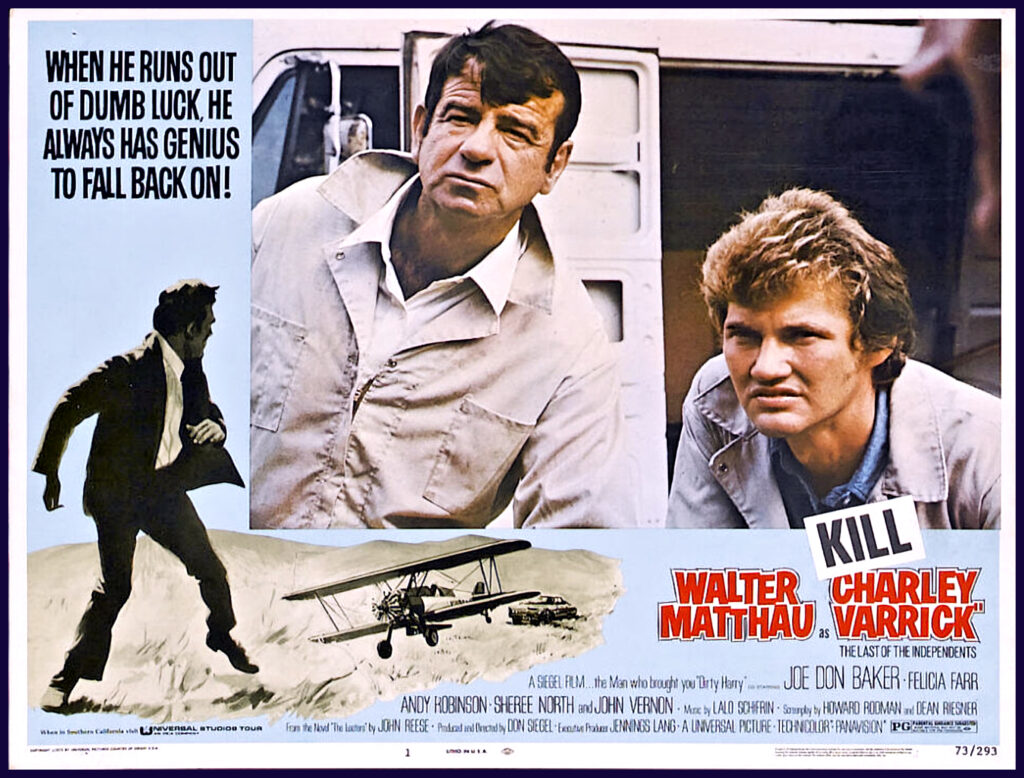
In Reese’s novel, Charley Varrick is a main character, but he’s a much darker, less sympathetic character than Walter Matthau’s version. Matthau’s charm transformed Charley into a criminal audiences could actually root for, and the film primarily focuses on him.
Varrick is a down-on-his-luck pilot. He joins with two small-time crooks in the robbery of a small rural bank. The haul is hundreds of thousands of dollars. But it happens to be money that was being laundered by the Mafia. They send one of their deadliest hit men, Molly, played memorably by Joe Don Baker in the film, to recover the money.
The novel tells the story in a way that switches between the perspectives of several characters, including Charley and a cop named Kenneth Steele, nicknamed “Stainless” by his colleagues.
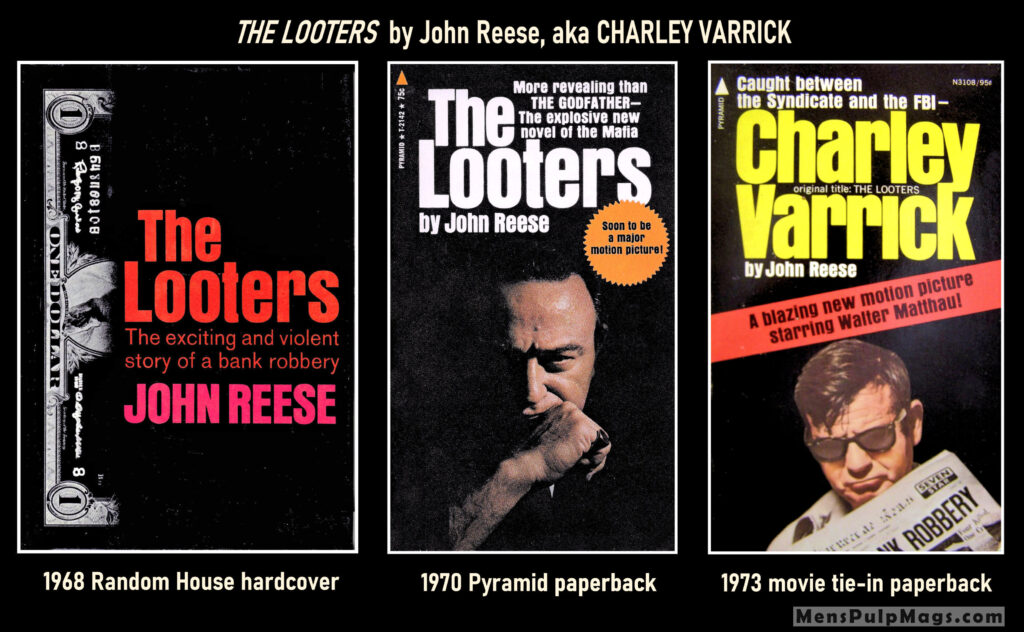
A central part of the plot in both the novel and the movie involves Charley’s efforts to avoid being killed by Molly.
In the film’s memorable climax, Charley kills Molly with a cleverly concealed booby-trap bomb.
But that’s not how it is in the book. In Reese’s novel “Stainless” Steele plays a much larger role —and he kills Molly. The “Book Bonus” version in MEN is a true condensation, faithful to what Reese wrote.
In addition to Gil Cohen’s cool faux book cover painting, the MEN version has a dramatic 2-page interior illustration by Bruce Minney, another top MAM artist I had the honor of knowing and interviewing when he was alive.
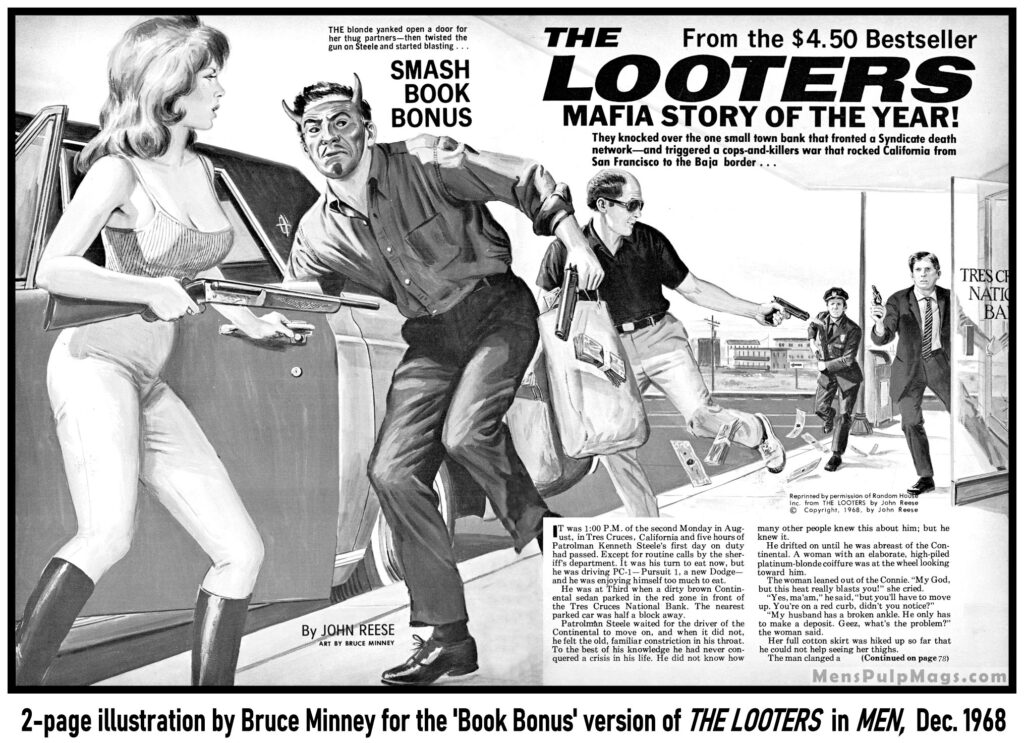
The two-page interior spread touts the story as a “SMASH BOOK BONUS” that is the “MAFIA STORY OF THE YEAR.” It also says the novel was a bestseller. It wasn’t—but it was successful enough to attract Hollywood’s attention and inspire a major motion picture.
Frankly, I like the movie better, though I enjoyed reading Reese’s original version. I also enjoyed the trip down the rabbit hole the “Book Bonus” sent me on. I had not previously known anything about John Reese and it was fun to rewatch the film after reading it.
While writing this post, I started wondering about the origin of the term “going down a rabbit hole.” I should have remembered. It comes from the opening scene of Lewis Carroll’s 1865 novel ALICE’S ADVENTURES IN WONDERLAND.
Alice notices a White Rabbit wearing a waistcoat and carrying a pocket watch. She sees him go down into his rabbit hole and follows him. Instead of finding an ordinary burrow, she falls down a deep tunnel into Wonderland, where one strange discovery leads to another.
Sort of like what happens to me when I read men’s adventure magazines.
Comments? Corrections? You can email them to me, or join the Men’s Adventure Magazines & Books Facebook Group or the MEN’S ADVENTURE QUARTERLY BRIGADE group and post them there. © Subtropic Productions 2026
* * * * *

To see a video preview of GIL COHEN: INSIDE/OUT—THE ARCHIVE EDITION, which includes the cover that sent me down the rabbit hole discussed above, click this link or the image below…